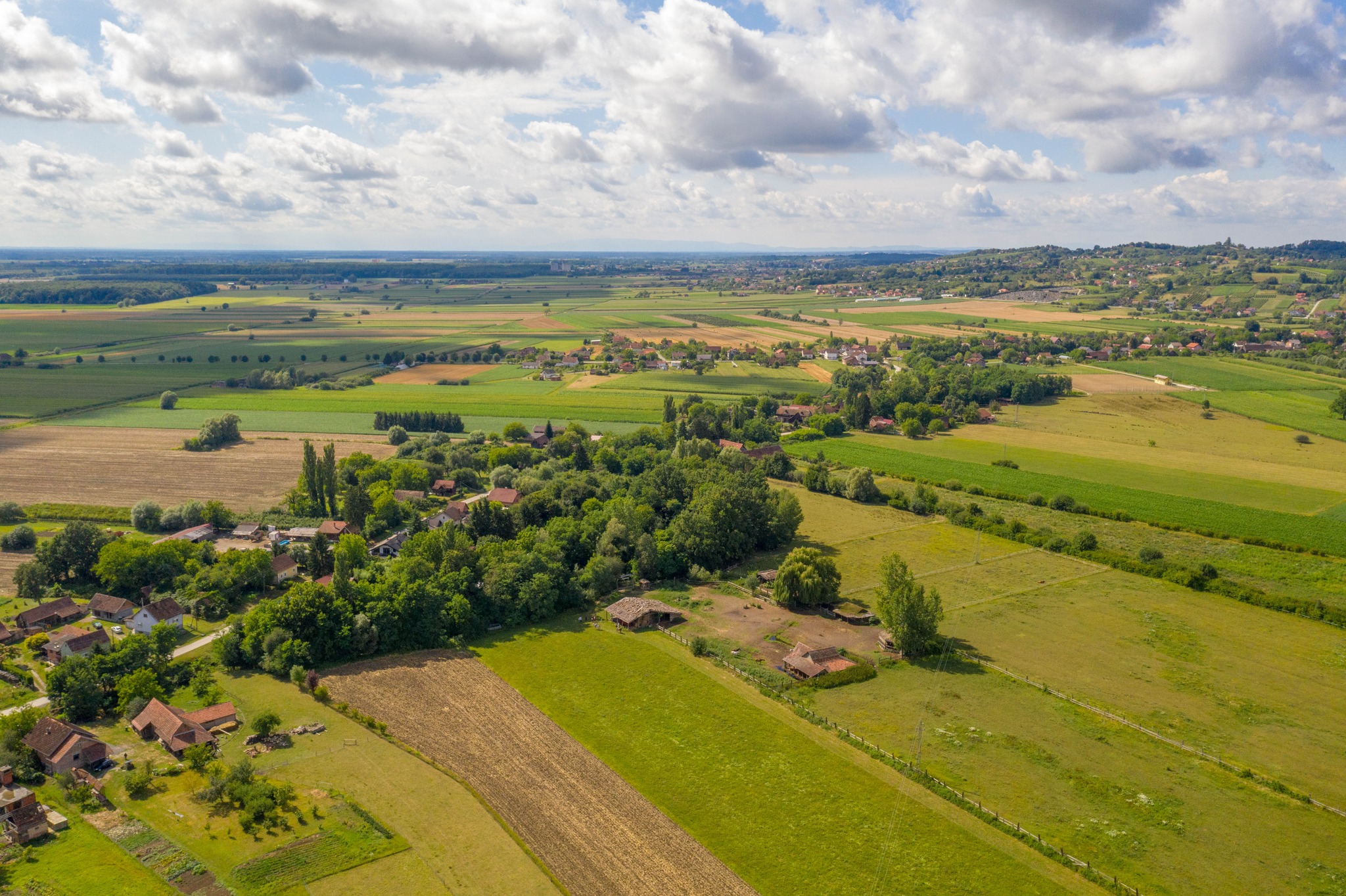
If any region of continental Croatia has a recognizable fingerprint, it is certainly Moslavina. It is not a place you get to know in a day or two, as it requires and deserves a far more personal approach. Through a two-part series of articles on our blog, we will bring closer what makes Moslavina so gentle and enjoyable throughout the entire year. Rolling vineyard slopes, forest paths, viewpoints and warm-hearted people form the essence of this region, where the rhythm of life is in harmony with nature.
From an ancient sea to fertile hills
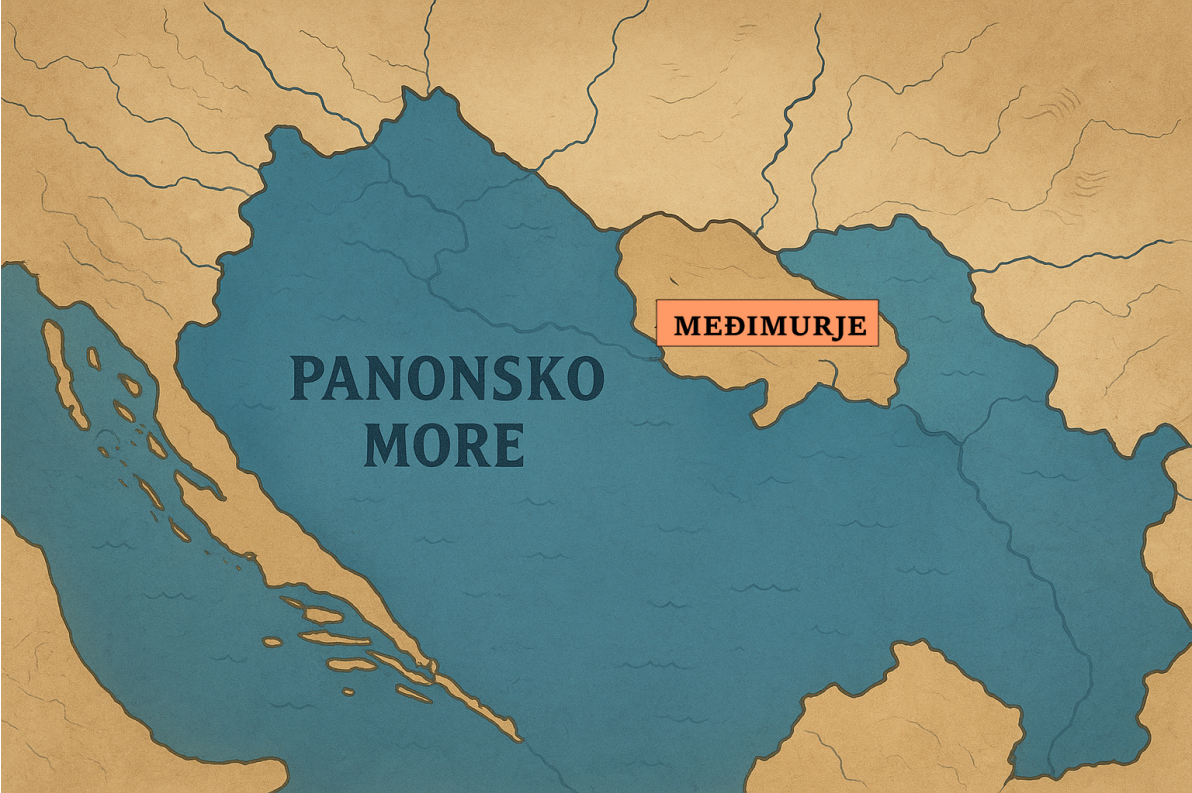
Long ago, the hills of today’s Moslavina were surrounded and covered by the Pannonian Sea, which once stretched across nearly ten present-day European countries, mainly during the Miocene and Pliocene periods, more than a million years ago. The Pannonian Sea was formed primarily due to the uplift of the Alps and the Dinarides, creating a vast depression filled with water over an area of about 200,000 square kilometers, with depths reaching up to 1,000 meters in some places.
Over time, due to tectonic movements and climatic changes, the sea gradually dried out and disappeared around 600,000 years ago, leaving behind the fertile Pannonian Plain. As the waters retreated, lakes and wetlands remained, such as Lake Balaton in Hungary, while in Moslavina the most notable remnant is Lonjsko Polje. The sea left behind rich geological layers of sediment, oil and gas, resources that Moslavina is particularly abundant in.
The former seabed is also the reason why this area is characterized by exceptionally fertile soils, which are still used today for cultivating a wide variety of crops. This geological chapter in Earth’s history laid the foundation for the fertile hills of Moslavina from which outstanding wines originate.
Wine heritage rooted in history
Although many like to play with the name of the region and associate it with vineyards and wine, the name Moslavina does not derive from wine. Its origin dates back to the time of the Croatian Kingdom, from the mountain range Mons Claudius, known today as Moslavačka Gora. Visitors who find themselves there may even come across fossils from the Pannonian Sea, locally referred to as stone shells.
It is no coincidence that as early as the reign of Emperor Claudius, whose administrative and military center was located in nearby Siscia, today’s Sisak, the Romans described the southern slopes of Moslavačka Gora as hills of good wine. Moslavina is still recognized as the homeland of indigenous grape varieties such as Škrlet, Moslavac and Dišeća Ranina. Škrlet in particular has achieved a significant milestone, as the Croatian Agency for Agriculture, Food and Rural Development officially recognized three of its clones, making it the first systematically branded Croatian grape variety, known for producing aromatic, fresh and fruit-forward wines.
The natural advantages of this wine-growing area, from fertile soil to favorable climate, combined with generations of knowledge and dedication of local winemakers, shape the distinctive character of Moslavina wines. These aromas and flavors are best experienced along the Moslavina wine roads between Kutina and Popovača, where wine tradition blends seamlessly with the surrounding landscape. Alongside wine tastings, many vineyard cottages proudly offer local gastronomic specialties, as well as accommodation in rural households, vineyard houses or family-run farms, creating a complete experience that combines heritage, flavor and hospitality.
Layers of history and living landscapes
Human presence in Moslavina dates back to prehistoric times, as early as the Stone Age. Stone artifacts have been recorded in the village of Tomašica near Garešnica, while copper finds have been discovered at several sites, including Marić Gradina near Mikleuška, Donja Paklenica, Ribnjača near Popovača, Voloder Hills and Čerten near Kutina. The earliest known inhabitants were the Illyrians, members of the Jasi tribe, particularly present at the Marić Gradina site. During this period, early fortifications and transport routes emerged, while the slopes of Moslavačka Gora saw the development of the first vineyards, indicating the beginnings of organized land use.
Numerous traces of Roman material culture have also been found throughout Moslavina, especially in the areas of Kutina and Popovača. However, during Roman times Moslavina did not develop into a major urban center, primarily due to the proximity of Siscia, an important Roman city and regional hub.
In the Middle Ages, significant fortifications were built on Moslavačka Gora, most notably the castles of Garić and Jelengrad. Garić Castle is mentioned as early as 1163 and later came under the ownership of the Zagreb bishops, who bore the title comes de Garich. In the 14th century it was held by the noble Čupori family of Moslavina, and in 1492 it passed into the hands of Toma Bakač. Among its last feudal owners were the Erdödy counts. During this period, Moslavina was characterized by relatively dense settlement and notable economic and cultural development, partly due to the proximity of Čazma, an important religious and cultural center.
From the 15th century onwards, Moslavina entered a period of insecurity caused by increasingly frequent Ottoman incursions across the Sava and Una rivers. Villages were abandoned, agriculture declined and the population retreated to fortified areas. By the late 16th century, after key victories by the Erdödy family and the Ottoman defeat near Sisak, the threat diminished, allowing organized resettlement and recovery.
In the 18th and 19th centuries, population growth and economic progress were driven by livestock breeding and viticulture, followed by extensive exploitation of oak forests for barrel staves and the gradual development of the wood industry. In the second half of the 19th and early 20th centuries, Moslavina underwent demographic changes through immigration, while the major turning point of the 20th century was the exploitation of oil and gas, which from the 1950s significantly reshaped the regional economy. Today, Moslavina lies at the intersection of three Croatian counties and remains a region with its own inner logic, beauty and a quiet, enduring story.
Discovering Moslavina on the move
Exploring Moslavina is best done on the move. For cycling enthusiasts, more than 300 kilometers of cycling routes and trails await, leading to wineries, family farms, rural households and lesser-known sites such as natural oil springs. Particularly notable are the routes around Kutina and in Lonjsko Polje Nature Park, whose extensive network connects Moslavina with Posavina and offers an ideal setting for recreational and family cycling.
This is only the beginning. In the next part of our Moslavina journey, we will explore its food, places to visit and experience, and beautiful holiday homes you can discover on our Destination Green Croatia platform.