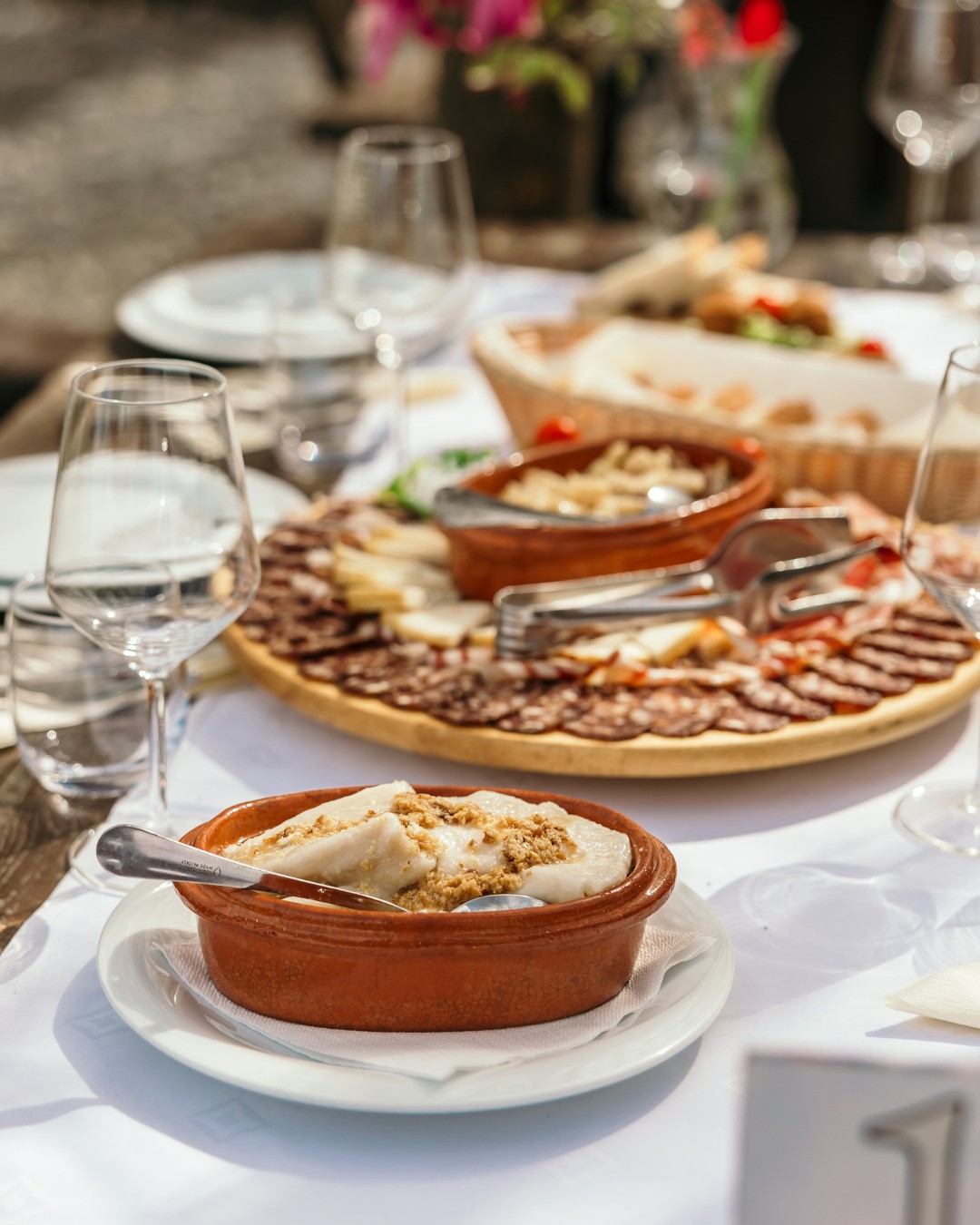
The second part of getting to know Moslavina is dedicated to what held Moslavina “together” day after day – mills, grain, and bread as the fundamental elements of life. From the watercourses of the Lonja, Česma, Ilova, and Kutinica rivers, along which mills once lined up, to household bread ovens and wooden racks on which bread was stored, we follow how flour was made, how life unfolded alongside sowing and harvest, and how customs and songs naturally became tied to the fields.
Where water grinds and the village lives
Once, the area of Moslavina was full of mills, along the Lonja, Česma, Ilova, and Kutinica rivers, as well as along a number of smaller rivers and streams that sustained village everyday life just as much as the fields did. Water was then the main driving force of everything: it set the stone in motion, and the stone turned grain into flour.
In Kutina, Hafner’s Mill is especially remembered, named after the family that owned it and whose name has remained as a kind of marker of local history of work and crafts. Today, remnants of former mills are scattered across Moslavina, silent traces of a rich milling heritage.
Many locals also milled grain themselves, for their own needs, which shows how self-sufficient households once were. Just as in other Slavic communities, life was firmly tied to the rhythm of sowing and harvest, and customs naturally followed the field. Fields were ploughed with a plough, seeds were often sown by hand, and spring was not just a season but the beginning of a new cycle.
At that time of year, around St George’s Day and St Mark’s Day on 25 April, the people of Moslavina held millet processions through the fields. The fields were blessed, and a sheaf of blessed green grain was brought home as a symbol of fertility, hope, and protection over what people lived from.
When harvest came, work was done with sickles and scythes, and later with machines. Along with the effort came harvest songs. Even today, they are preserved by cultural and artistic societies in Moslavina, as a reminder that the field once meant both economy and culture, work and identity.
Bread that was kept like a treasure
Everything in Moslavina connected to gastronomy is tied to bread, which stood at the centre of the table and was not merely a side dish as it often is today. As soon as one leaves the Lonjsko Polje area, Moslavina turns to flour, bread, browned soups, zlevanka, and all those dishes created with few ingredients but plenty of love. Bread was baked in bread ovens, which almost every house had, and it was baked rarely, because new bread was not made until the old one had been completely used up.
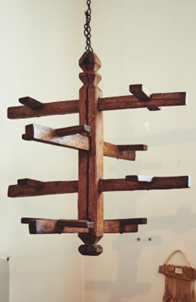
It was kept in dry pantries, on wooden racks called križanice. And when it hardened so much that it reached the stage of being like “stone,” it was not discarded; instead, the bread was soaked in water to soften it and make it last for a few more meals until the next baking.
In everyday life, cornmeal bread was eaten most often, while breads made from barley and rye flour, as well as proja, were also frequently prepared. Wheat flour, however, was primarily reserved for festive occasions. For Christmas, Easter, and childbirth celebrations, ritual, decorated festive breads and flatbreads (“svetečna hlebovina”) were baked, and wheat bread and flatbreads were brought into the house as a gift for the newborn.
What else was eaten when it was not a holiday
Fish, on the other hand, was long a matter of availability and status among the inhabitants of Moslavina. In the villages of the Lonja area, such as Krapje, it was a natural part of everyday life; for fishermen and people living by the rivers it was close at hand, but toward Kutina and further into Moslavina, fish dishes disappear from menus. For ordinary people, fish was less accessible the farther they lived from rivers, so it was eaten by wealthier households and purchased fresh or dried. Today, carp and pike-perch are still the river stars of Lonjsko Polje: carp most often swims again in fiš or ends up on roasting spits, while pike-perch à l’orlý delights every guest of Moslavina restaurants.
Outside of holidays, the diet was simple but very filling. In the morning, people ate cornmeal mush with sour milk and lard, potato soups and cicvara, and occasionally white potato dumplings. Stews and vegetable dishes (beans, cabbage, kale, green beans) dominated the table, along with pasta and dumplings, often filled with plums, such as tačkrli and čipanci. Among desserts, bundt cakes, gibanica (with cheese, poppy seeds, or carob), strudels, buhtle, and “poderane gaće” were common.
If one weekend you decide to prepare a true Moslavina family lunch, we recommend taking a look at the recipe book created as part of the “Okusi domaće!” project, carried out in partnership by three LAGs (LAG Međimurski doli i bregi, LAG Mura–Drava, and LAG “Moslavina”).
In this booklet you will find interesting traditional recipes with a touch of modernity, from “pokrpani dedač,” “green border-guard soup,” and “Moslavina mushroom soup,” to “Grandma Nada’s dumplings.”
If you are not much of a master in the kitchen, we definitely recommend a trip to Moslavina and tasting the gastro specialities in person, and during your stay, find perfect accommodation for your travel companions on the Destination Green Croatia platform!